Showing posts with label historical. Show all posts
Friday, April 10, 2015
Adepticon 2015: Fistful of Seamen and the Adventure of HMS Titan's Uranus
At Adepticon Tim and I participated in the Saturday night edition of this massive, colorfully-named "Fistful of Seamen" (FoS) swashbuckling and sailing game.
Easily the largest game I've ever been a part of, this massive game spanned a half-dozen tables, a few dozen ships and what appeared to be 50-plus participants.
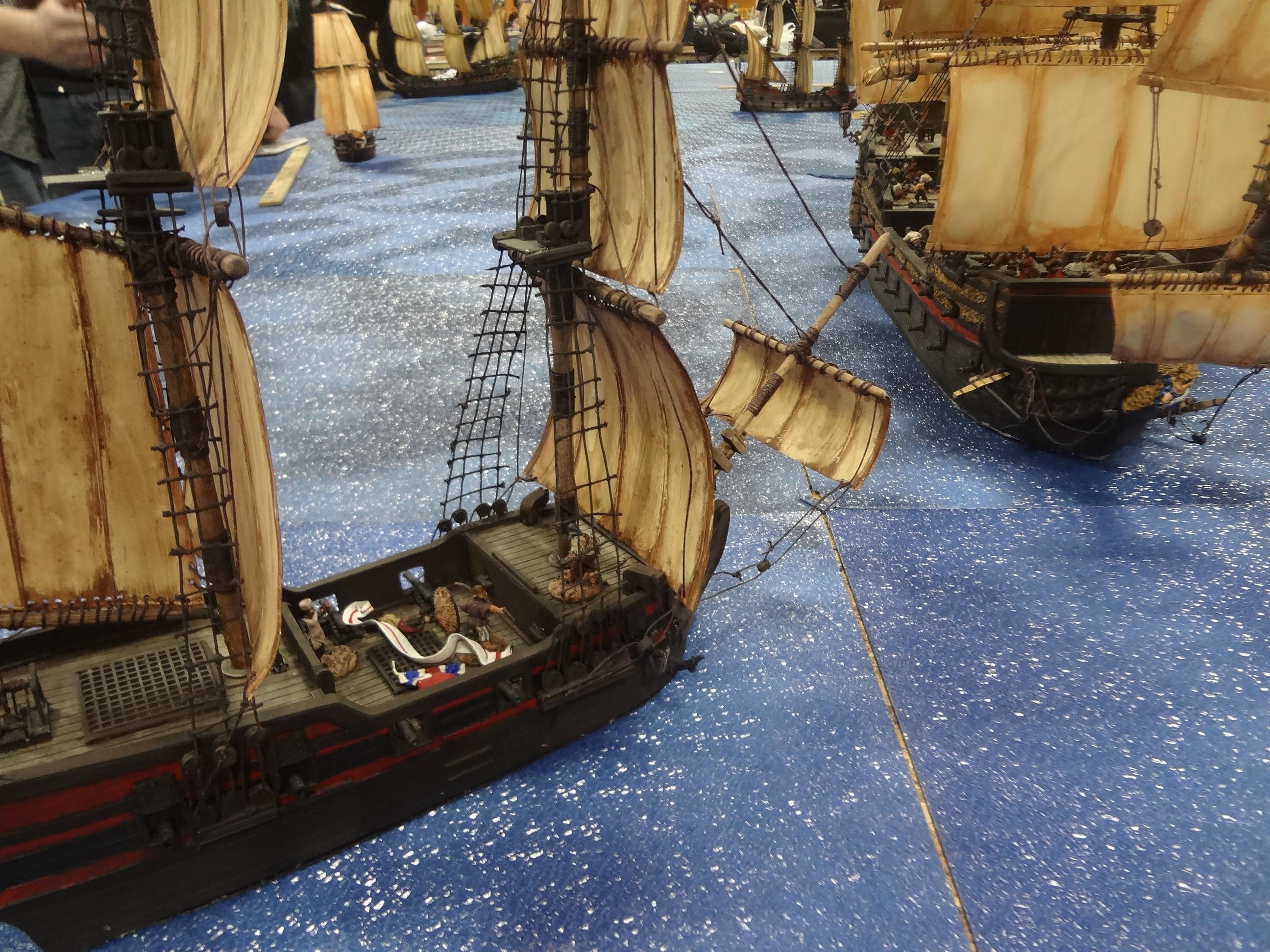
We had spoken with some of the gamemasters (all of whom appeared in suitable pirate garb) and looked at the terrain ahead of time, but our participation nearly didn't happen. Tickets were sold out, so we hung around the table as the event began and learned what we could. Nations in the game included the French, Dutch, English and Spanish. Players might be military, traders, privateers or pirates depending on what boat they selected. The number of ships available was dizzying.
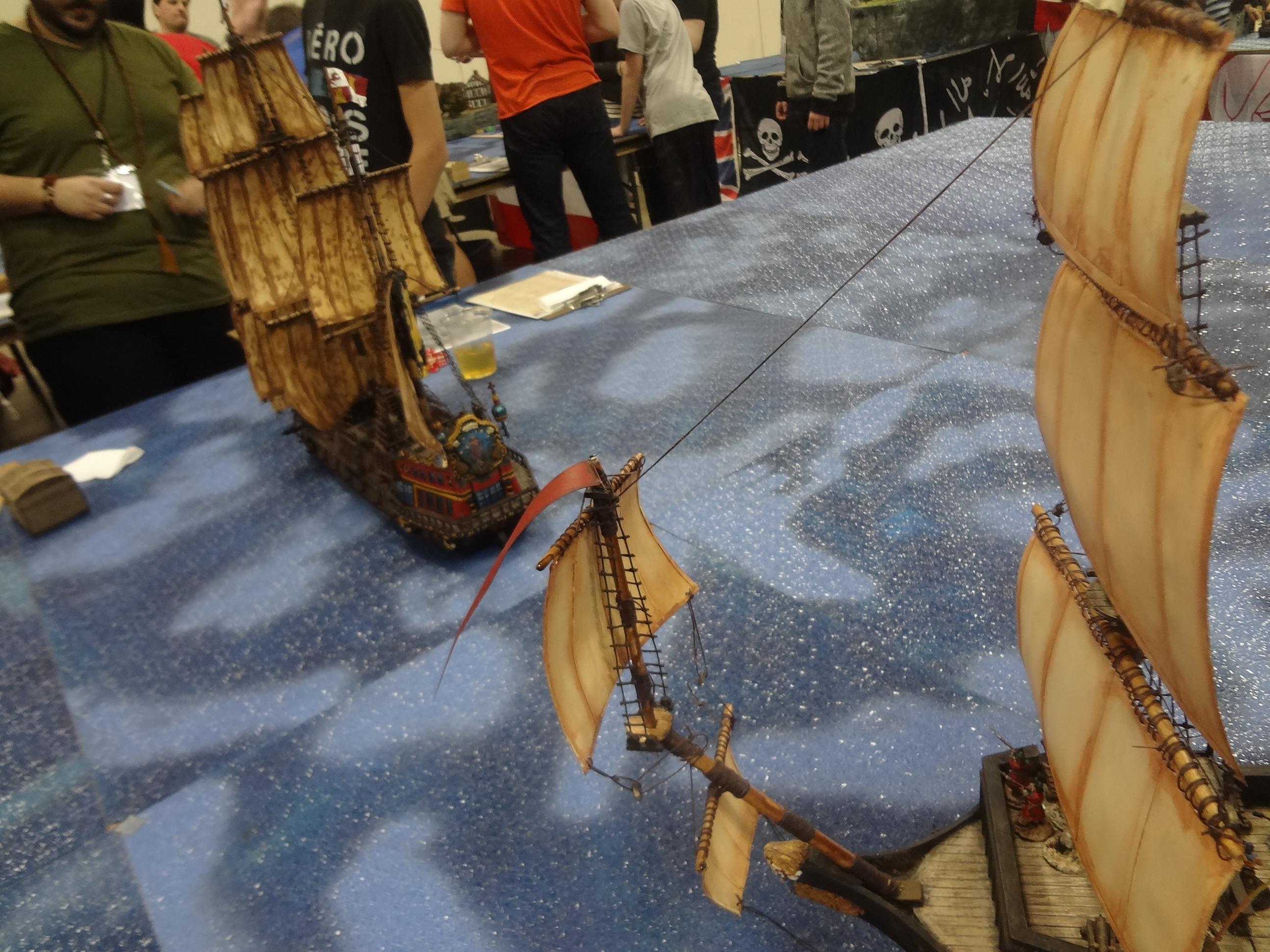
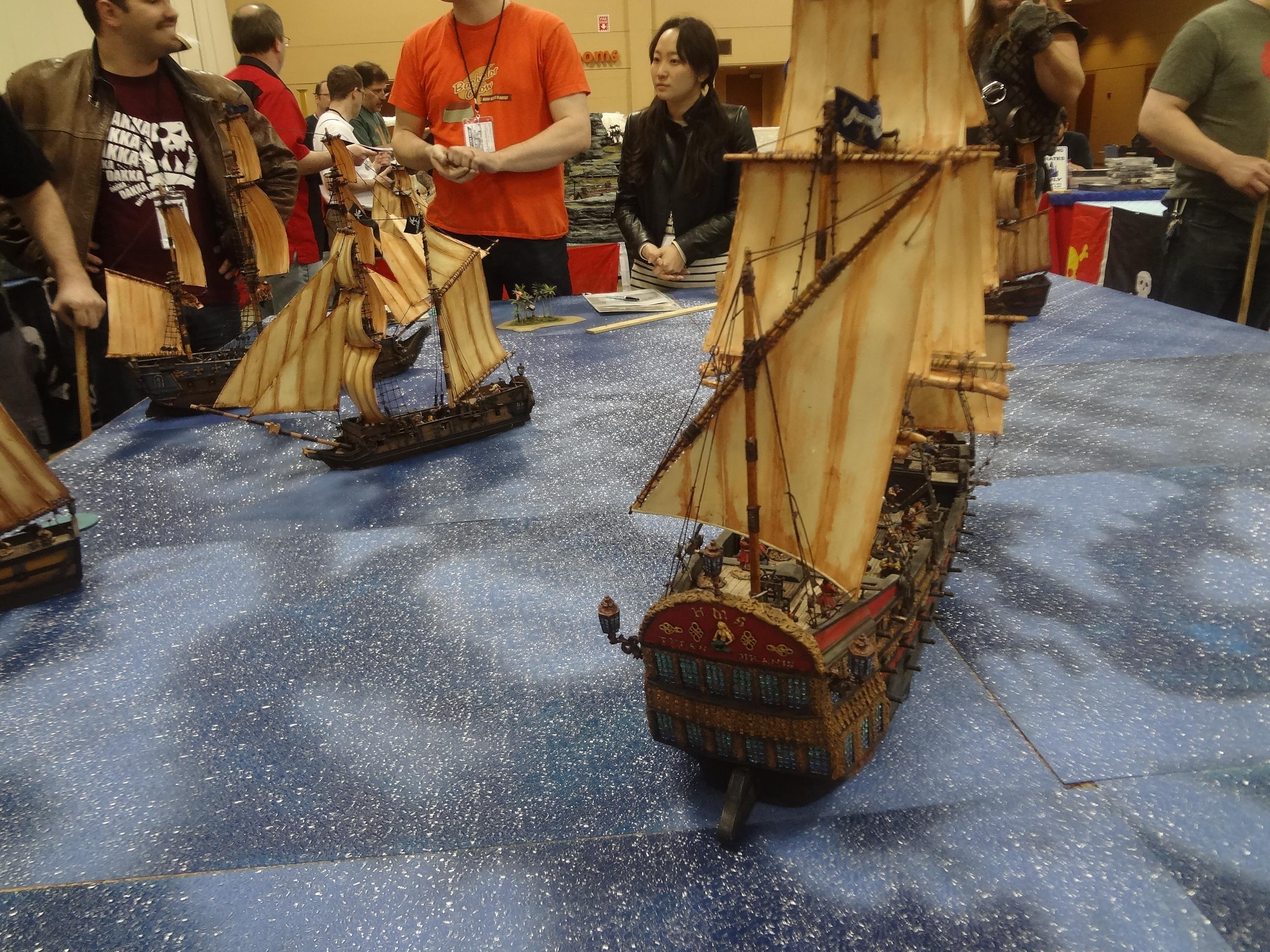
Luckily, captains who had participated the previous evening were allowed to select "First Mates" from the unwashed masses. Admiral D. was kind enough to pick Tim and me, and we joined him as crew on the HMS Titan's Uranus (I kid you not) hereafter referred to as the Titan. This massive 5-master was the crown of the English fleet and the largest ship in the game.
To attempt to report on the entire game would have been madness, but the beauty of FoS is that each ship essentially plays out its own adventure as it interacts with the other players and the various features of the game. So we'll just follow the Titan's adventures.
As soon as the game began, we left the English port and began to sail across the board escorting a trio of smaller schooners and traders. No sooner had we reached the open sea then we were set upon by the Marseille. The vessel was the pride of the French navy and nearly matched our own size.
We bravely placed ourselves between the raider and our charges, allowing them to slip away. Despite it being a time of peace, the brash French captain declared that we mush strike colors, raise the French flag and join his fleet. We replied with appropriate scorn and righteous indignation.
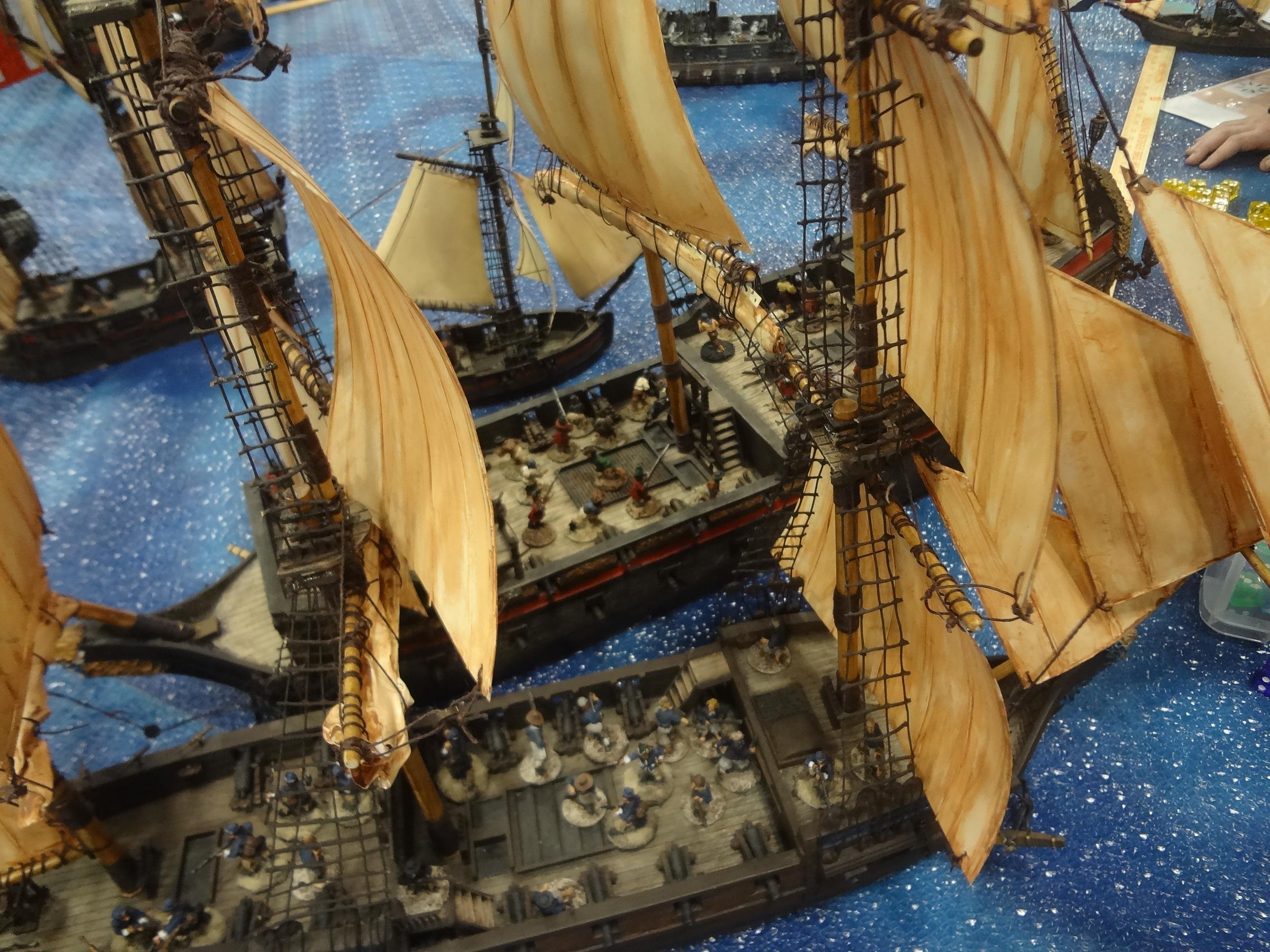
The ships closed quickly and brutal deck-to-deck combat ensued. After taking a significant casualties, our crew surrendered. Admiral D. was taken onto the Marseille, and the first mate of the Marseille became our new captain. Under her command, we sailed on to the French island for repairs and re-crewing, but upon arrival a surprise was waiting for us.
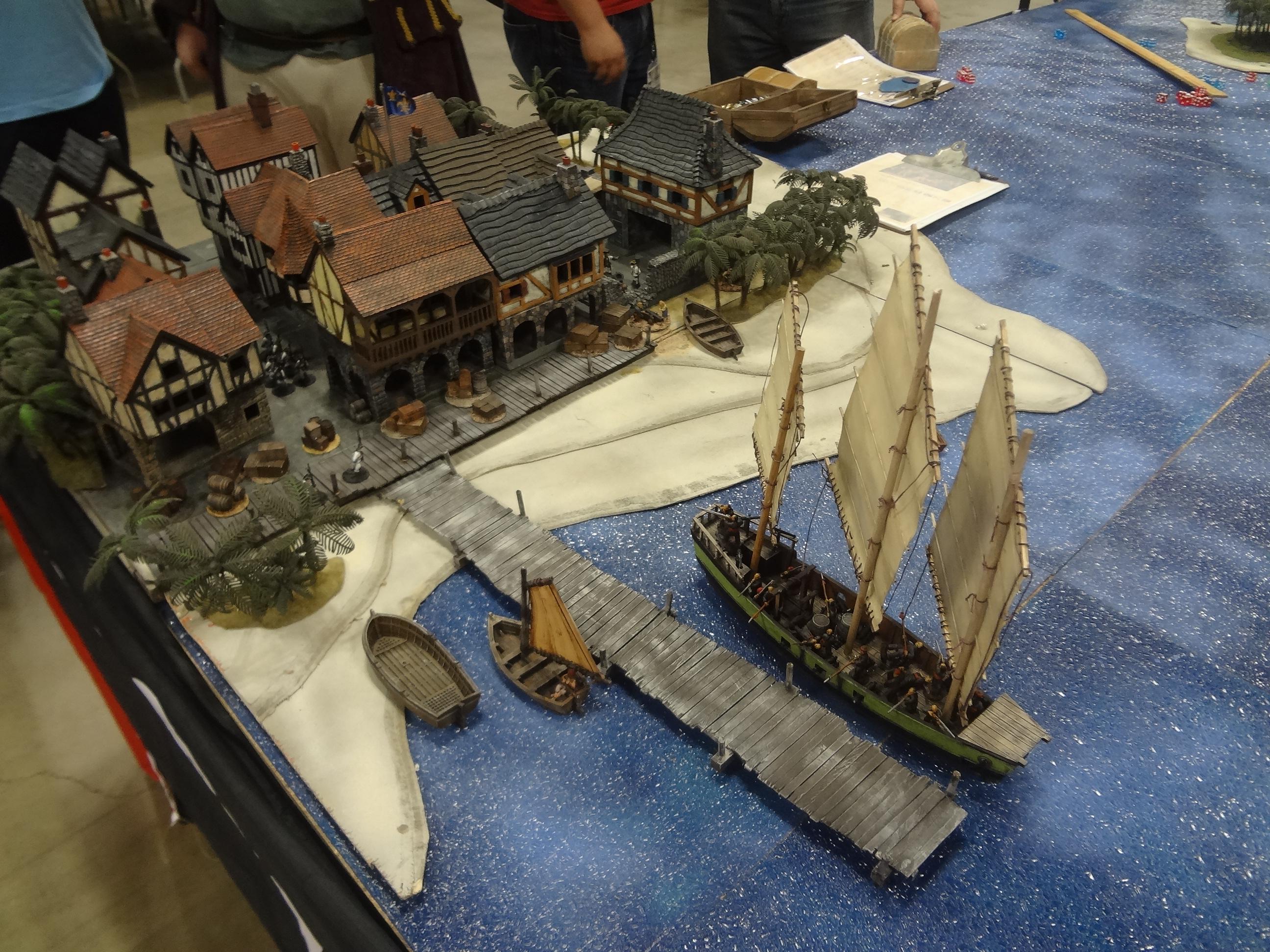
As we sailed into the port, the French Governor immediately stated his intention to seize or destroy our ship. As we had been taken in a time of peace, its seizure was considered an act of piracy. Seeking to avoid a diplomatic incident, the Governor was prepared to try the entire crew as pirates.
We begged the Governor's favor and explained that we had been brought under duress and would willingly hand over the rebel French captain. The Governor agreed. I dueled our French captain for command and she was defeated. We handed her over to the Governor to be hung for piracy and bringing dishonor to the name of France. Though given no refit, we were encouraged to raise our original English flag and leave the island post-haste.
Thus we found ourselves somehow in command of one of the most fearsome ships on the sea. We set off again across the sea, heading back toward the English island. Spain had recently declared war on the English and on the way, we briefly skirmished with a Spanish galleon.
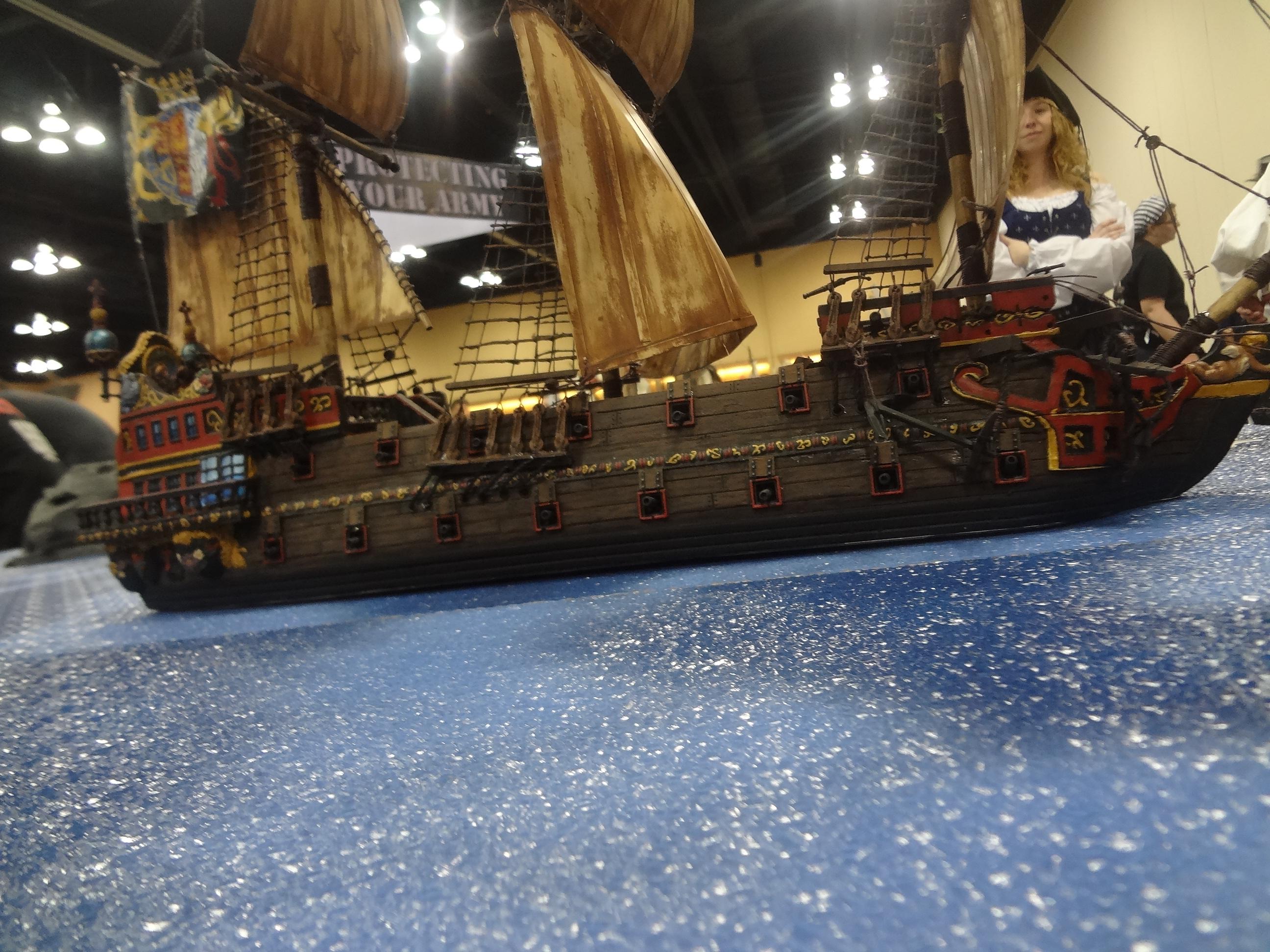
However, our swifter craft safely made it home in time to leisurely watch the papist galleon be mercilessly raked by the English island's artillery.
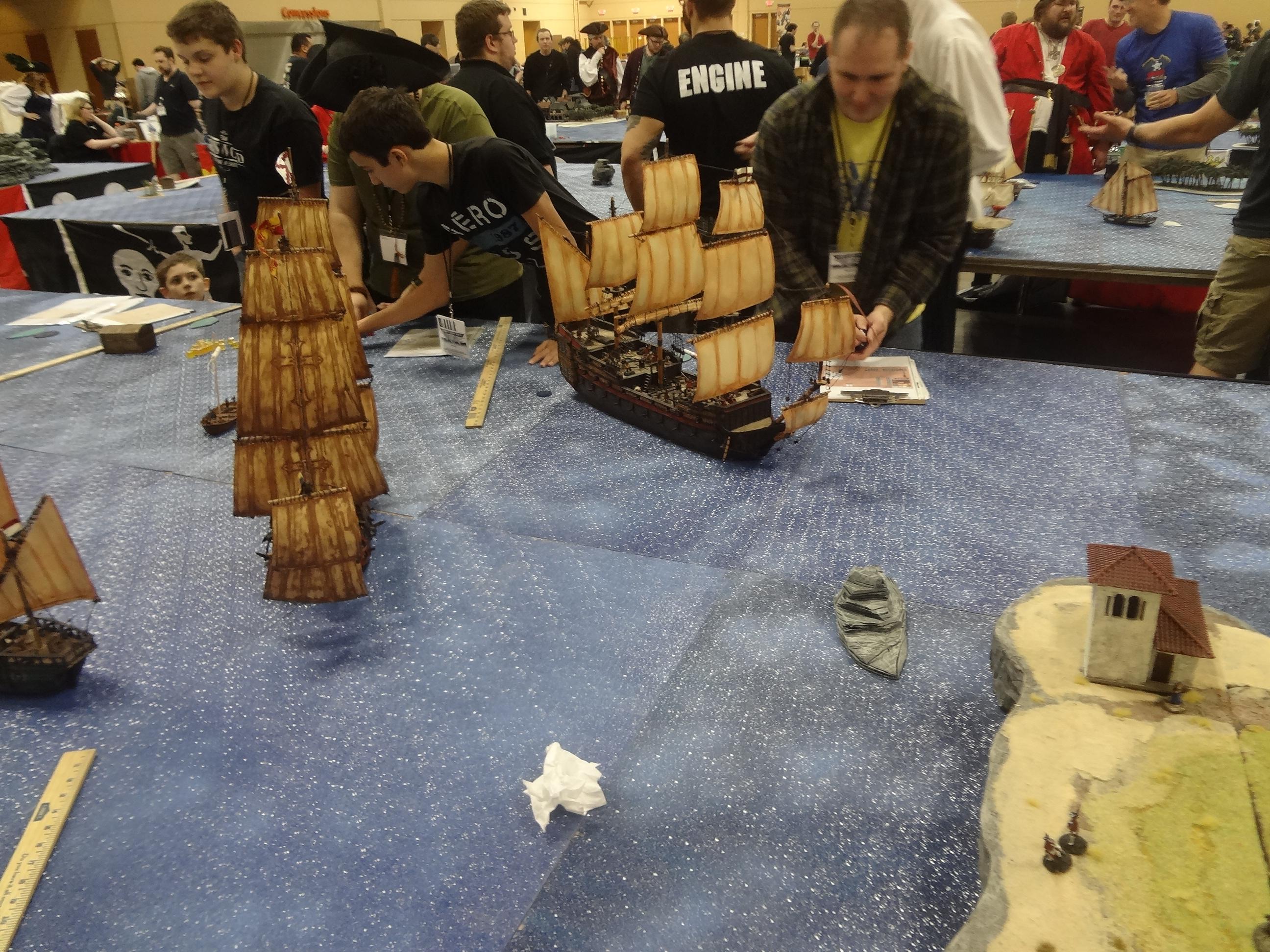
Having feared us lost, the Governor listened with rapt attention to our tale of battle, capture and return. After hearing our tale he heartily congratulated us and awarded us promotions in honor (the currency of the game for military units) and titles to lands.
Following a full refit and with a full crew we set out again on the open sea. A minor skirmish with some pirates ensued. We were not capable of pursuing them into rocky shoals, so after a blistering broadside to demonstrate the seriousness of our position, we extorted a minor fee and let them go.
Returning to the French port again in peacetime, we paid some coin to learn the local news (the game allows for "buying" a random game event) and discovered that the Kraken had been sighted! With this disturbing news, we returned to blue water only to be set upon the feared and neigh-invincible Ghost Ship.
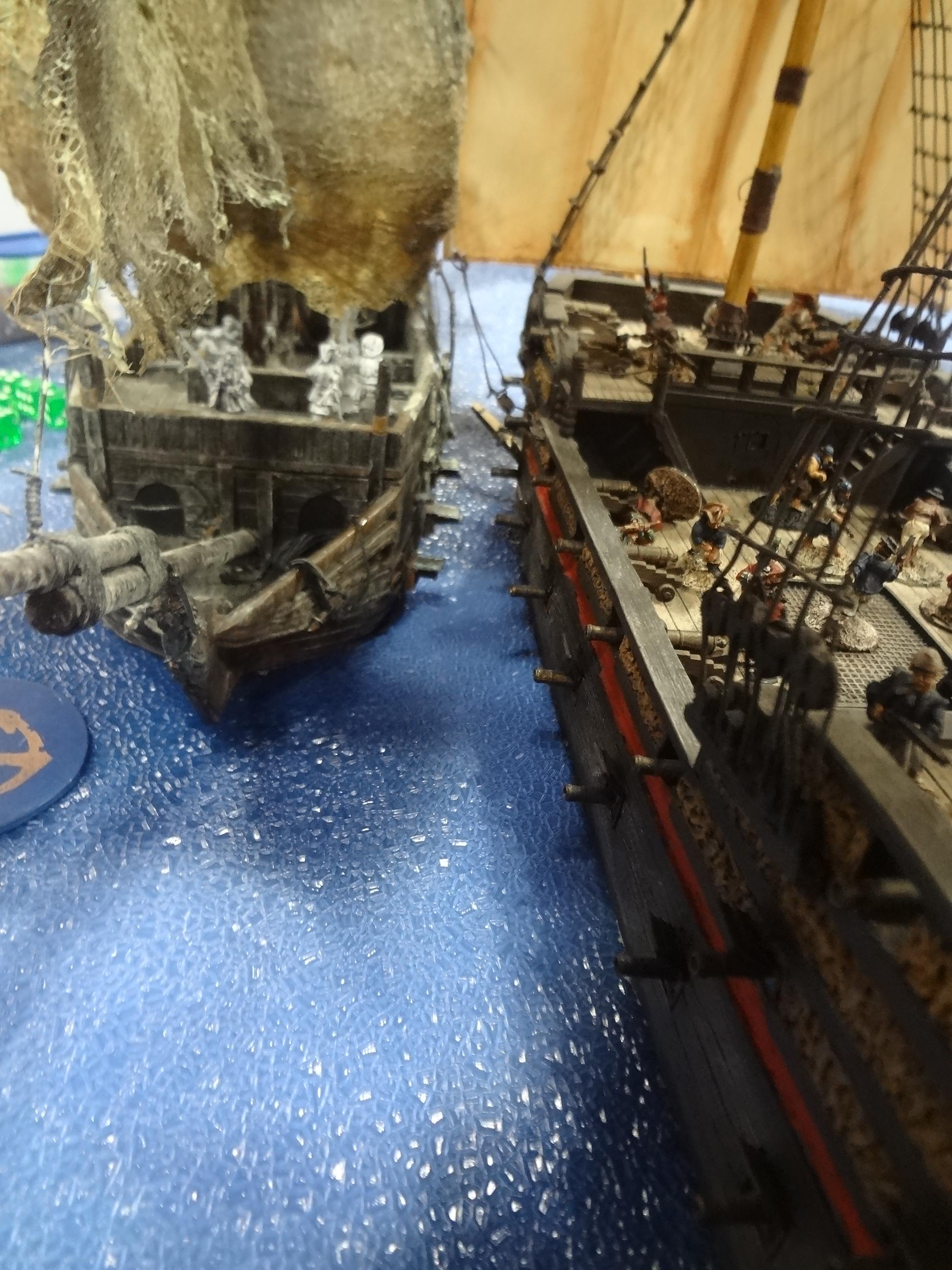
We reluctantly paid the Ghost Ship's tax and gave a tithe of his crew as souls to the feed the spectral vessel's terrible appetites. There was not time to ruminate on the fate of those poor devils, however. No sooner had we left the unholy vessel than we came across the Kraken!
Fortunately for us, the legendary beast proved to not be as fearsome as its reputation. A few volleys set the monster back on its heels long enough for the Titan to sail away.
With our tour coming to an end (the game was nearing it's completion), the Titan at last returned to the English island to exchange the last of our deeds and gold into honor and lands.
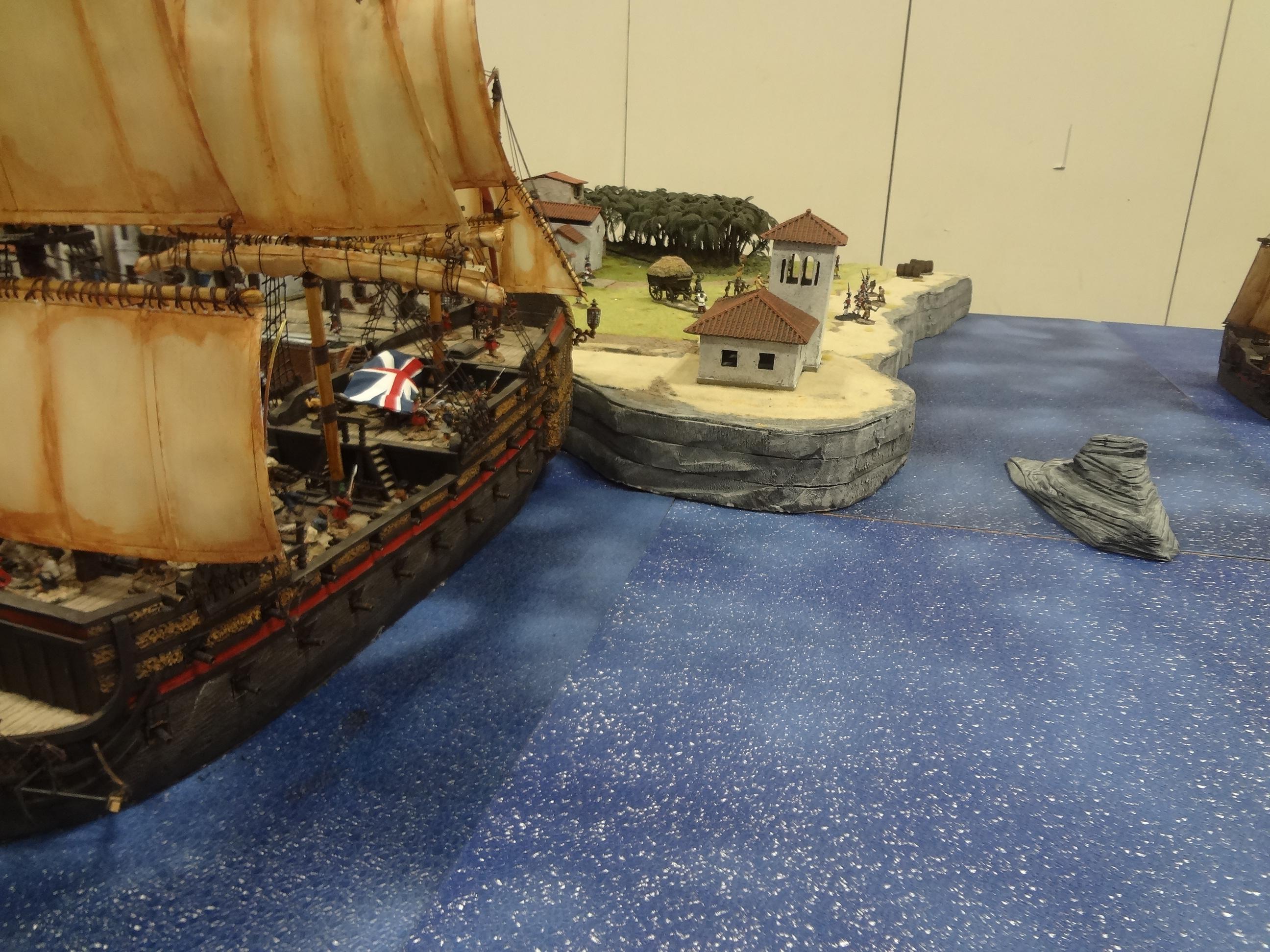
Our experience with FoS was a real pleasure. The ruleset was concise, and a dozen GMs were present to assist in combat resolution and clear up whatever complications might arise. I'm not usually a fan of systems that require writing down one's commands in advance, but I greatly enjoyed FoS's mechanics which required each captain to make two moves ahead during each turn. Tim thinks we could play it out with his small scale Uncharted Seas ships.
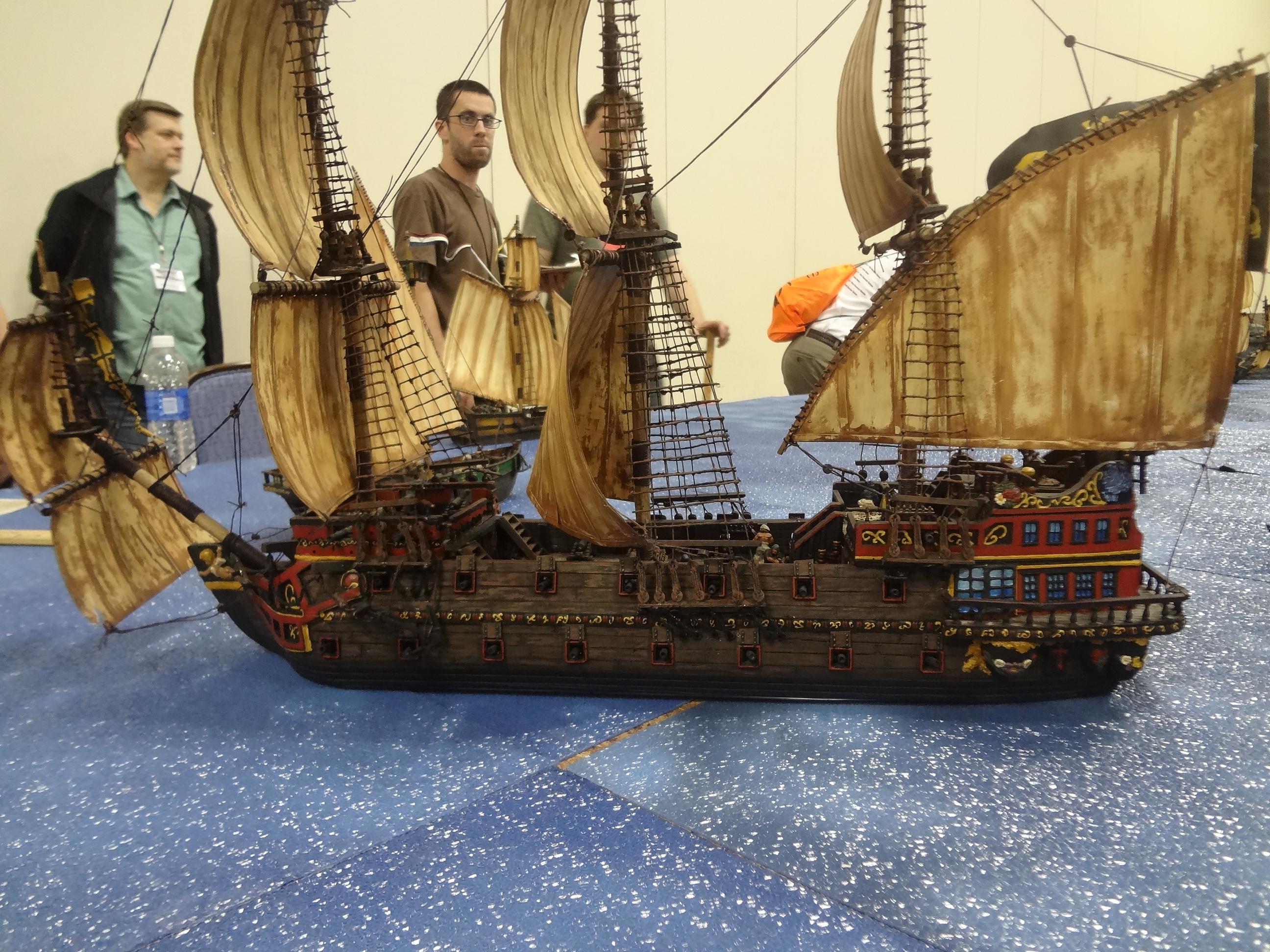
The ruleset as a whole seems to target fun as the highest priority, and it paid off handsomely. Though we supposedly had the most fearsome ship on the sea, brief contact with other captains showed that every ship seemed to be made to excel in a specific manner, such that no player's fun was handicapped by their vessel and some rather unassuming vessels were quite fearsome.
If the cheers at the post-game debrief were any indication, I suspect that every captain in the game could tell a tale as dramatic as ours.
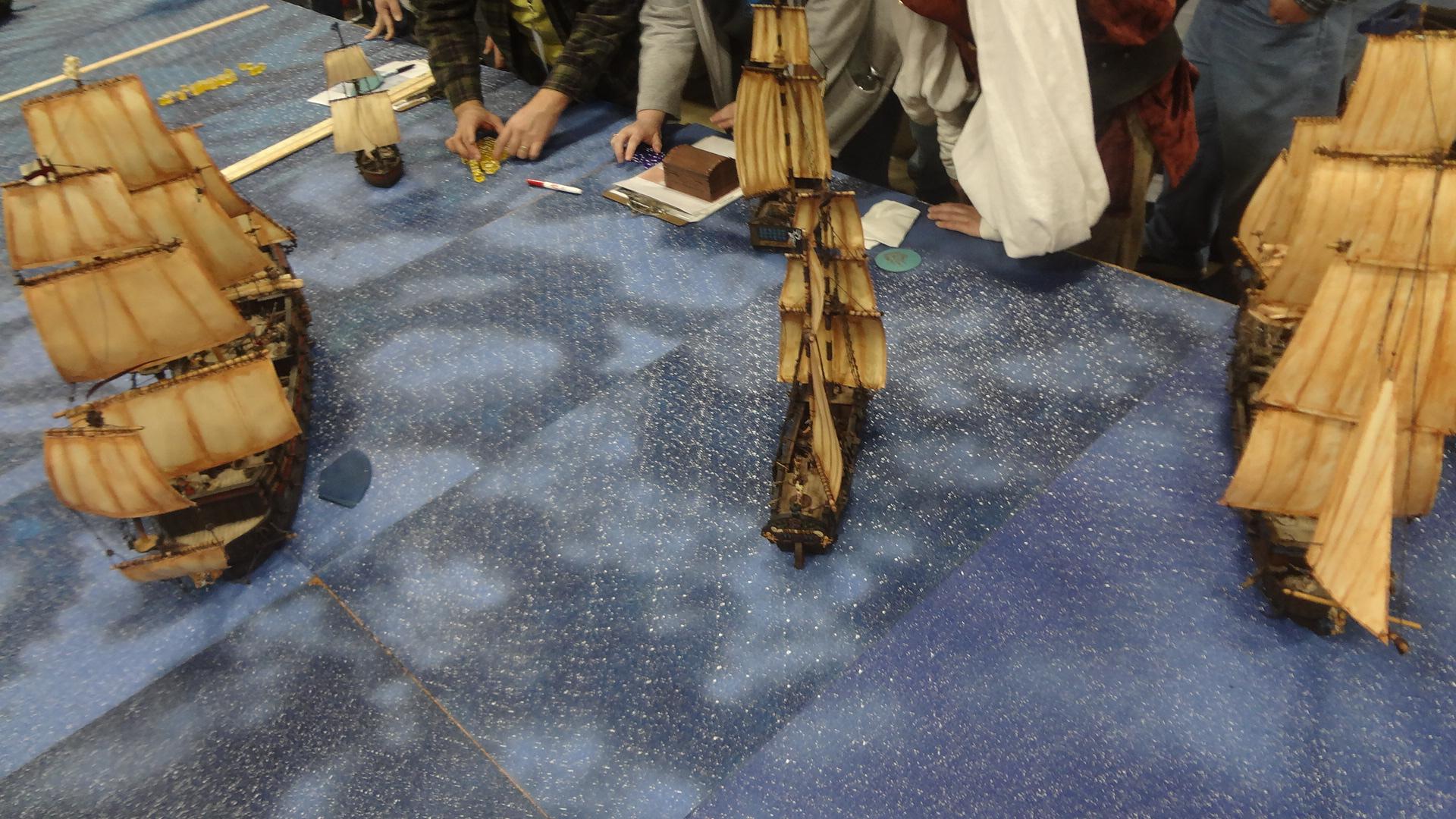
All in all, an excellent participation game and one that I would be pleased to play again. Most interestingly, this has created a small spark of interest in swashbuckling games, a genre I've never been interested in before. Definitely not something on my immediate radar, and certainly not an undertaking of this size, but maybe someday when I'm in need of a new gaming project I'll turn my eyes to the high seas.
-- Karl, Chicago Skirmish Wargames club member
Wednesday, March 6, 2013
History Games Con in Elk Grove Village
CSW gamer Michael is one of the organizers behind the third annual History Games Con, set for noon to 7 p.m. Saturday, April 6 at Al Hattendorf Center, 225 E. Elk Grove Blvd., Elk Grove Village, in suburban Chicago. Head on out and take a look if you've got the afternoon free! The event promises to be a fun, family-friendly time.
History Games Con is dedicated to board games and miniatures games with a historical theme. Expected games on the roster will be Catan Trails to Rails, Age of Discovery, Anasazi, Bison, Go West, Puerto Rico, San Juan, Carcassonne, Dominion, Havana and Priests of Ra.
Miniature games will include a 1/1200 scale Napoleonics naval game, as well as Desperado, a wild west-themed miniatures game. Prizes will be awarded to the top three game winners. Additionally, anyone who brings a game to run will be entered into a raffle for a prize. The Military Miniature Society of Illinois will be on hand with a cool model display and information about the club's activities. Light refreshments will be available. Admission is $3 in advance and $5 at the door. Call 847-439-3994 for information.
(That neat photo at the top is from shamelessly borrowed from Tim's Tanks blog. Great pic!)
Wednesday, May 30, 2012
Naval Thunder report: Battle of the Denmark Strait
A few months ago four of us made the long trek out to Games Plus in Mt.
Prospect to play our club's first naval game. With only a few people attending, it made sense to
play a battle with a small number of ships. The one I picked happened to also be one of
the classic battles of WWII.
In late May, 1941, the German battleship Bismarck tried to break out into the North Atlantic. Accompanied by a heavy cruiser, the Prinz Eugen, the two German ships set a course for the Denmark Strait. They were met by the Royal Navy's newest battleship and the pride of the fleet, HMS Hood. HMS Prince of Wales was so new that she hadn't even gone through her trials yet and still had civilian dockworkers on board. Hood was a ship built at the end of WWI and was considered at the time to be the most powerful in the world, at least by the British.
The miniatures we used were all 1/3000-scale ships from a variety of manufacturers. That scale is getting quite rare in the US and can really only be found in England. All the miniatures except Hood were made by Skytrex. Hood was brought from a fellow named Mick Yarrow, who makes these ships in his basement. He makes some odd ships like German carriers, and I have dealt with him many times.
The rules we used for this skirmish are called Naval Thunder: Battleship Row and the expansion, Bitterest Rivals. It is a very well-polished rule system that I have used many times for naval games. It covers time periods from the Spanish-American War of 1898 to WWII.
There were a handful of specific rules for this scenario, mostly to accurately reflect the conditions of the ships during this particular battle — and they all affected the British. Prince of Wales had to roll each turret separately and any ones rolled would negate that turret's fire, reflecting the poor state of affairs aboard that new ship.
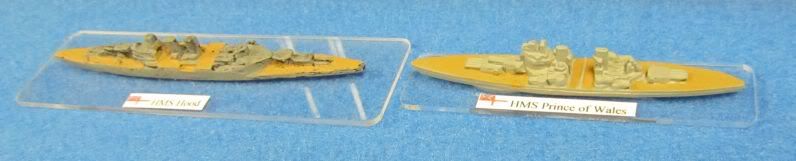
In addition, the British would have to roll a command check if either ship was sunk. I had Hood, Tim had Prince of Wales, Karl had the powerful Bismarck, and Kevin was stuck with Prinz Eugen, a ship which was totally outclassed in the battle. Here are the British ships:
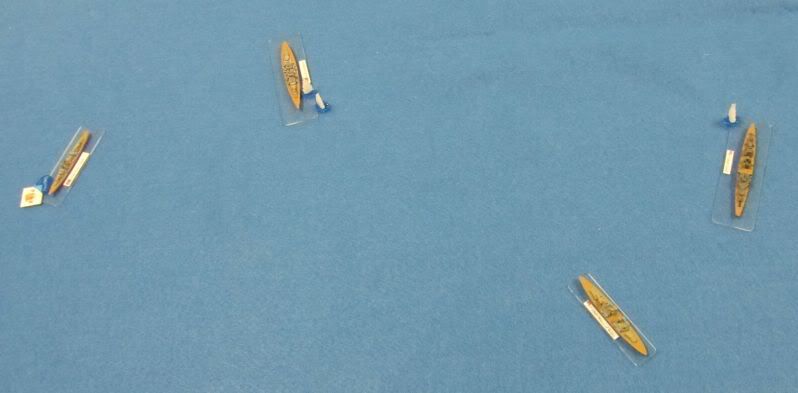
After a short explanation of the rules, we were off. Turn one had Hood and Prince of Wales, turning to starboard (right). The Germans moved toward their exit point, still unsure about the rules. Hood fired at Prinz Eugen and missed. Bismarck hit Prince of Wales, as did Prinz Eugen. However, the smaller guns on Prinz Eugen did no damage at all.
Turn 2 had the British continuing their turn to cut off the Germans and uncover all their guns. Bismarck and Prinz Eugen continued on course, as the British shooting hadn't done much the previous turn. Hood fired on Prinz Eugen again and hit, penetrating the weak armor and causing the cruiser to begin flooding. Bismarck and Prince of Wales exchanged fire, both hitting but not causing major damage. Prinz Eugen failed to fix her flooding and took more damage.
In Turn 3, the Germans changed tactics. Realizing that they were being overwhelmed, Bismarck turned to port (left) to unmask all her guns. Prinz Eugen continued on course while the British continued on their previous course to keep the Germans from their objective. Bismarck fired on Hood for a change and hit, but didn't penetrate Hood's moderate armor. Prince of Wales hit Bismarck and did some hull damage, but not a lot. Hood smashed Prinz Eugen's engine room, reducing the cruiser's speed while Prinz Eugen managed to hit Hood and do some damage, but nothing critical.
On Turn 4 Bismarck continued to turn while all the other ships remained on their previous course. Hood switched fire to Bismarck and did some damage. Bismarck replied and did some damage to Hood, while Prince of Wales caused a fire to start on the beleaguered Prinz Eugen. But Prinz Eugen hit Hood again and damaged the large ship's engines.
During Turn 5 Bismarck reversed course now headed to starboard while the British continued on their course. Hood blew up after a devastating barrage from Bismarck, while Prince of Wales smashed one of Bismarck's main battery turrets. Prinz Eugen sank as a result of fires and flooding.
Turn 6 started with only half the remaining ships in the fight. The loss of Hood had not scared the British, and they continued to fight. Both ships moved in close, blasting away with everything they had. While Bismarck did some damage to Prince of Wales, she took a lot of damage in return. Her bridge was smashed and she was on fire.
On Turn 7 it was all over. Prince of Wales crossed the T of Bismarck and raked her with a well-aimed round of fire, causing the Bismarck to slip under the waves and vanish into the pages of history.
Everyone had a lot of fun playing and all agreed to try it again in the future. Our results differed greatly from those of history, and yet some things remained the same. In reality, Bismarck and Prinz Eugen briefly exchanged fire with the British before Hood blew up and Prince of Wales turned around and sailed away, having accomplished nothing in the battle. Bismarck sailed on and was damaged a few days later, making her attempt to return to Brest in occupied France for repairs. She was attacked and sunk by the Royal Navy on her way there.
— Mike, Chicago Skirmish Wargames club member
In late May, 1941, the German battleship Bismarck tried to break out into the North Atlantic. Accompanied by a heavy cruiser, the Prinz Eugen, the two German ships set a course for the Denmark Strait. They were met by the Royal Navy's newest battleship and the pride of the fleet, HMS Hood. HMS Prince of Wales was so new that she hadn't even gone through her trials yet and still had civilian dockworkers on board. Hood was a ship built at the end of WWI and was considered at the time to be the most powerful in the world, at least by the British.
The miniatures we used were all 1/3000-scale ships from a variety of manufacturers. That scale is getting quite rare in the US and can really only be found in England. All the miniatures except Hood were made by Skytrex. Hood was brought from a fellow named Mick Yarrow, who makes these ships in his basement. He makes some odd ships like German carriers, and I have dealt with him many times.
The rules we used for this skirmish are called Naval Thunder: Battleship Row and the expansion, Bitterest Rivals. It is a very well-polished rule system that I have used many times for naval games. It covers time periods from the Spanish-American War of 1898 to WWII.
There were a handful of specific rules for this scenario, mostly to accurately reflect the conditions of the ships during this particular battle — and they all affected the British. Prince of Wales had to roll each turret separately and any ones rolled would negate that turret's fire, reflecting the poor state of affairs aboard that new ship.
In addition, the British would have to roll a command check if either ship was sunk. I had Hood, Tim had Prince of Wales, Karl had the powerful Bismarck, and Kevin was stuck with Prinz Eugen, a ship which was totally outclassed in the battle. Here are the British ships:
After a short explanation of the rules, we were off. Turn one had Hood and Prince of Wales, turning to starboard (right). The Germans moved toward their exit point, still unsure about the rules. Hood fired at Prinz Eugen and missed. Bismarck hit Prince of Wales, as did Prinz Eugen. However, the smaller guns on Prinz Eugen did no damage at all.
Turn 2 had the British continuing their turn to cut off the Germans and uncover all their guns. Bismarck and Prinz Eugen continued on course, as the British shooting hadn't done much the previous turn. Hood fired on Prinz Eugen again and hit, penetrating the weak armor and causing the cruiser to begin flooding. Bismarck and Prince of Wales exchanged fire, both hitting but not causing major damage. Prinz Eugen failed to fix her flooding and took more damage.
In Turn 3, the Germans changed tactics. Realizing that they were being overwhelmed, Bismarck turned to port (left) to unmask all her guns. Prinz Eugen continued on course while the British continued on their previous course to keep the Germans from their objective. Bismarck fired on Hood for a change and hit, but didn't penetrate Hood's moderate armor. Prince of Wales hit Bismarck and did some hull damage, but not a lot. Hood smashed Prinz Eugen's engine room, reducing the cruiser's speed while Prinz Eugen managed to hit Hood and do some damage, but nothing critical.
On Turn 4 Bismarck continued to turn while all the other ships remained on their previous course. Hood switched fire to Bismarck and did some damage. Bismarck replied and did some damage to Hood, while Prince of Wales caused a fire to start on the beleaguered Prinz Eugen. But Prinz Eugen hit Hood again and damaged the large ship's engines.
During Turn 5 Bismarck reversed course now headed to starboard while the British continued on their course. Hood blew up after a devastating barrage from Bismarck, while Prince of Wales smashed one of Bismarck's main battery turrets. Prinz Eugen sank as a result of fires and flooding.
Turn 6 started with only half the remaining ships in the fight. The loss of Hood had not scared the British, and they continued to fight. Both ships moved in close, blasting away with everything they had. While Bismarck did some damage to Prince of Wales, she took a lot of damage in return. Her bridge was smashed and she was on fire.
On Turn 7 it was all over. Prince of Wales crossed the T of Bismarck and raked her with a well-aimed round of fire, causing the Bismarck to slip under the waves and vanish into the pages of history.
Everyone had a lot of fun playing and all agreed to try it again in the future. Our results differed greatly from those of history, and yet some things remained the same. In reality, Bismarck and Prinz Eugen briefly exchanged fire with the British before Hood blew up and Prince of Wales turned around and sailed away, having accomplished nothing in the battle. Bismarck sailed on and was damaged a few days later, making her attempt to return to Brest in occupied France for repairs. She was attacked and sunk by the Royal Navy on her way there.
— Mike, Chicago Skirmish Wargames club member